

Premium automotive protection mistakes that can reduce finish quality often begin before any film, tint, coating, or correction work touches the vehicle. They begin with rushed decisions, unclear expectations, poor preparation, weak materials, and a lack of planning around how the vehicle is actually driven.
For luxury vehicle owners, Tesla drivers, executives, entrepreneurs, and premium clients across the Bay Area, automotive protection should never feel like a shortcut. The purpose is to preserve finish quality, reduce avoidable wear, protect long-term vehicle value, and give the owner more confidence every time the vehicle is driven.
Paint protection film, stealth PPF, window tint, ceramic coating, paint correction, windshield protection film, and interior protection can all be valuable. But when they are chosen or installed incorrectly, the result can look less refined than the vehicle deserves.
Want to protect your vehicle before the first rock chip happens? Talk to a premium installer.
Mistake one: choosing protection without a proper assessment
One of the most common mistakes is selecting a package before the vehicle is properly evaluated. A new Tesla, a black Porsche, a matte Mercedes-Benz, a daily-driven Range Rover, and a weekend BMW M car do not all need the same protection plan.
Premium automotive protection mistakes that can reduce finish quality happen when the installer does not consider paint condition, driving habits, vehicle design, exposure level, finish type, and owner expectations. Without assessment, the recommendation becomes generic.
A proper assessment should look at the vehicle’s surfaces, vulnerable areas, existing defects, contamination, trim details, previous repairs, and how the owner uses the car. Is the vehicle driven daily on Highway 101 or I-280? Is it parked outdoors? Is it exposed to coastal air, tree sap, construction dust, or tight parking?
How can a protection plan be truly premium if it ignores the way the vehicle is actually driven?
Mistake two: treating all protection products the same
Paint protection film, ceramic coating, window tint, windshield protection film, and paint correction are different services with different purposes. Treating them as interchangeable can create confusion and disappointing results.
Paint protection film provides a physical layer over painted surfaces and can help reduce damage from common road debris, light abrasion, bug acids, and daily wear. Ceramic coating helps with slickness, gloss, easier washing, and resistance to certain environmental contaminants. Premium tint can improve heat rejection, UV protection, privacy, and cabin comfort.
Windshield protection film is designed for a different exposed surface. Paint correction improves visible defects before coating or protection. Each service has a role, and the best results often come from a thoughtful combination.
Trying to preserve resale value without compromising the finish? Get expert guidance.
Mistake three: skipping preparation
Preparation is where premium results are built. Even the best film or coating can look disappointing if the surface underneath is not clean, inspected, and prepared correctly.
Some owners assume that a new vehicle is automatically ready for protection. That is not always true. New vehicles may arrive with transport marks, light swirl marks, dealership handling defects, water spots, adhesive residue, or surface contamination.
Installing PPF over contamination can trap imperfections. Applying Ceramic Pro or another ceramic coating over defects can make those defects more noticeable. Tinting glass without proper cleaning can affect clarity and edge quality.
Premium automotive protection mistakes that can reduce finish quality often come from rushing this stage. A premium finish requires patience before installation, not excuses afterward.
Looking for a cleaner, longer-lasting result instead of a rushed installation? Schedule a consultation.
Mistake four: ignoring paint correction when needed
Paint correction is sometimes misunderstood. It is not about unnecessary polishing. It is about improving the surface before protection is applied when defects are present.
For dark-colored vehicles, swirl marks and haze can be especially visible. For luxury vehicles, even minor finish issues can distract from the overall appearance. If a ceramic coating is applied over defects, the vehicle may become easier to maintain, but the defects remain underneath.
A proper installer will not automatically recommend correction for every vehicle. Instead, the finish should be inspected under proper lighting. When correction is needed, it should be explained clearly and performed responsibly.
Would you rather protect the finish as it is, or improve it first so the final result looks more refined?
Mistake five: choosing weak materials
Not every film, tint, or coating performs the same. Weak materials may look acceptable on the first day but create problems later. Low-quality PPF can discolor, lift, stain, or lose clarity. Poor tint can fade, bubble, or provide limited heat rejection. Weak coatings may fail to deliver the maintenance benefits owners expected.
Premium clients should care about what is being installed. Product quality matters because the protection becomes part of the vehicle’s appearance and ownership experience.
For paint protection film, features such as self-healing film technology, optical clarity, durability, and reliable adhesive behavior matter. For premium tint, heat rejection and UV protection matter. For ceramic coating, proper preparation and professional application matter.
Comparing premium protection options and unsure where to start? Request professional advice.
Mistake six: accepting poor installation standards
A premium product installed poorly can still lead to a poor result. Installation quality is often the difference between protection that looks integrated and protection that looks distracting.
Common issues include trapped debris, stretch marks, rough edges, visible seams, lifted corners, misaligned film, contaminated tint, and uneven coating application. These details can reduce finish quality and make the vehicle feel less premium.
Controlled installation standards are essential. The environment, lighting, tools, surface preparation, installer experience, and final inspection all influence the outcome.
Premium automotive protection mistakes that can reduce finish quality are often visible in the small details. On a luxury vehicle, small details matter.
Mistake seven: cutting corners near paint
Cutting directly near painted surfaces without proper control can create unnecessary risk. A premium installer should use computer-cut precision and pre-cut installation when appropriate to reduce avoidable cutting around sensitive areas.
Computer-cut precision helps patterns fit the vehicle consistently. Wrapped edges are used when possible to create a cleaner appearance and reduce visible film lines. However, not every panel can be wrapped the same way. Vehicle design and long-term film stability both matter.
Experienced installers understand when to wrap, when to trim, and when a certain edge strategy is best for the vehicle. The goal is protection that respects the design, not rushed coverage that creates risk.
Need a protection plan that matches your driving habits and your vehicle? Contact an experienced team.
Mistake eight: forgetting Bay Area driving conditions
Bay Area driving conditions create specific risks. Daily commuters face freeway debris, dust, road work, tight parking, UV exposure, coastal moisture, and constant stop-and-go traffic. A vehicle that looks perfect at delivery can begin showing wear quickly.
Tesla owners, in particular, often drive frequently and park in high-exposure areas. Model 3, Model Y, Model S, Model X, and Cybertruck owners may benefit from Tesla protection that includes full front protection, rocker panel coverage, premium tint, windshield protection film, and ceramic coating.
Luxury SUVs, performance sedans, and exotic vehicles also face real exposure. Full front protection may be enough for some drivers. Full body coverage may be better for others, especially when long-term vehicle value, rare paint, or a stealth finish is a priority.
Mistake nine: misunderstanding stealth PPF
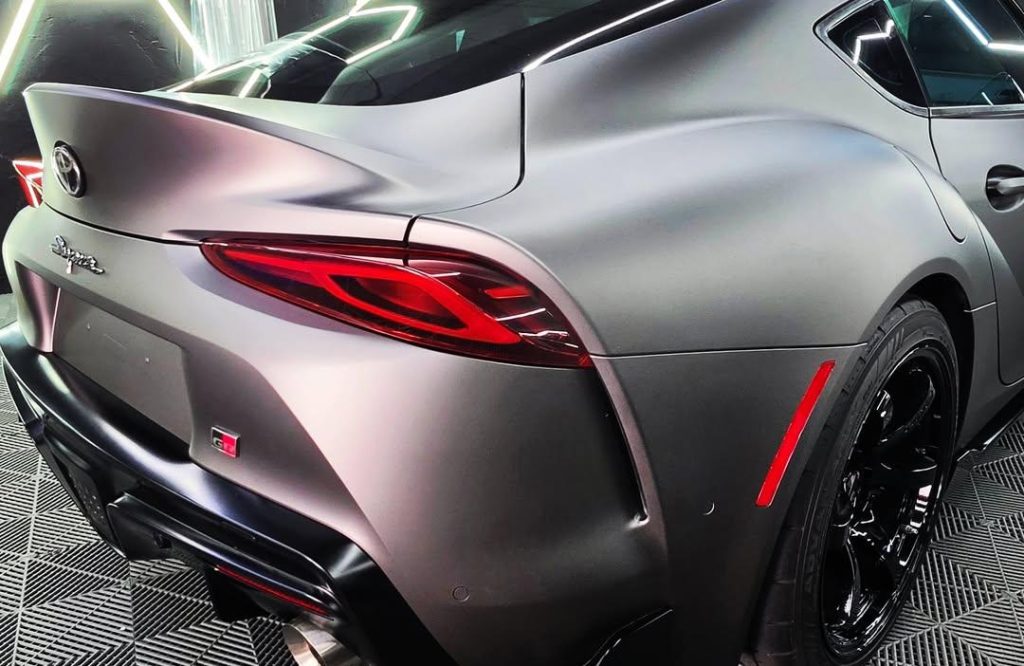
A stealth finish can completely change the appearance of a vehicle. It can turn a gloss finish into a satin or matte-style look while helping preserve the original paint underneath. But stealth PPF is not a casual upgrade.
Because stealth film changes the visual character of the car, consistency matters across panels. A rushed installation can create uneven texture, visible seams, or distracting transitions. For most stealth transformations, full body coverage is usually needed to create a complete visual result.
Stealth finish work requires planning, clean installation, edge control, and careful delivery. The vehicle should look intentionally refined, not partially modified.
Want your new vehicle protected from day one? Speak with a specialist.
Mistake ten: assuming ceramic coating replaces PPF
Ceramic coating is valuable, but it does not replace paint protection film. This is one of the most common misunderstandings in vehicle protection.
Ceramic coating can improve gloss, slickness, and maintenance. It can help with certain environmental contaminants and make washing easier. But it does not provide the same physical impact protection as paint protection film.
If the main concern is rock chips on the front bumper, hood, fenders, and mirrors, PPF is usually the stronger option. If the goal is easier cleaning and improved gloss, ceramic coating may be the right addition.
Recent market observations show growing demand for premium vehicle protection, especially among owners seeking long-term finish preservation, resale value, and practical protection for daily driving.
Mistake eleven: overlooking window tint quality
Window tint is often viewed as a style upgrade, but premium tint can do much more. For many drivers, especially Tesla owners and luxury vehicle owners with large glass surfaces, heat rejection and UV protection are major benefits.
Poor tint can reduce clarity, bubble, discolor, or fail to provide the expected comfort. A rushed installation can leave contamination, uneven edges, or visual distractions.
A premium tint installation should consider performance, legal requirements, appearance, glass shape, and customer expectations. The goal is comfort and refinement, not simply making the windows darker.
Mistake twelve: ignoring windshield protection film
Windshield protection film can be valuable for drivers who spend a lot of time on highways. The windshield is one of the most exposed surfaces on the vehicle, especially in Bay Area traffic.
This film can help reduce certain chips and surface wear, although it should never be presented as a guarantee against all windshield damage. Like every protection product, it has limits.
When paired with paint protection film, ceramic coating, and premium tint, windshield protection film can be part of a more complete daily-driver preservation strategy.
MCAR’s method: planning before installation
MCAR’s approach is built around planning before installation. Instead of treating every vehicle the same, the team evaluates the car, listens to the customer, and recommends protection based on real driving conditions.
With more than 18 years of roots in Brazil, more than 7 years operating in California, and multiple Bay Area locations, MCAR brings experience, structure, and premium service standards to automotive protection. The goal is not to rush vehicles through the shop. The goal is to deliver a clean, durable, and refined result.
The process follows a structured method: vehicle assessment, product recommendation, preparation, installation, delivery, and aftercare guidance. Each step supports finish quality and long-term satisfaction.
Premium automotive protection mistakes that can reduce finish quality become less likely when the process is consultative instead of transactional.
Customer education prevents bad decisions
Premium service should include education. Clients should understand the difference between full front protection and full body coverage, the role of Ceramic Pro, the value of paint correction, the limits of PPF, and the importance of aftercare.
Kyle R. shared, “I had my car tinted at M Car Window Tint in San Bruno about a month ago. The process was easy and fast. They quoted me and scheduled me the same day, explained the work clearly, and the tint still looks just as good. I’m super happy with the work and would highly recommend this place!”
That type of feedback reflects more than installation. It reflects communication, clarity, and trust.
Kevin also shared, “Pedro was extremely friendly and helpful. They did a fantastic job on the ceramic tint, everything looks great, and afterward they gave me clear instructions and explained the benefits of PPF without being pushy at all.”
Premium clients do not want pressure. They want professional guidance.
Aftercare mistakes can affect results too
Aftercare matters after the vehicle leaves the shop. Washing too aggressively too soon, using harsh chemicals, ignoring curing periods, or failing to follow care instructions can affect the final result.
Paint protection film, tint, and ceramic coating each have specific aftercare considerations. Owners should understand what to expect as materials settle, how to wash properly, and when to contact the installer with questions.
MCAR emphasizes aftercare guidance because protection is not complete at delivery. Long-term satisfaction depends on both professional installation and responsible maintenance.
Attention | Service available via WhatsApp and phone. Scheduling conditions and team availability may vary based on evaluation and confirmation with the MCAR team.
Protecting finish quality with smarter decisions
The best way to avoid finish-quality problems is to slow down before choosing a service. The right installer will ask questions, inspect the vehicle, explain options, set realistic expectations, and recommend a protection plan that fits the car and owner.
Premium automotive protection mistakes that can reduce finish quality are avoidable when the process is built around expertise instead of shortcuts. Premium vehicles deserve protection that respects their design, paint, value, and daily exposure.
No film, coating, tint, or protection service should be described as miraculous. Roads are unpredictable, and every material has limits. But the right plan, installed carefully, can help reduce preventable wear and preserve the ownership experience.
FAQ
What is the most common mistake in automotive protection?
The most common mistake is choosing a package without a proper vehicle assessment. Protection should be based on the vehicle’s finish, driving habits, exposure level, and owner goals, not a generic recommendation.
Can ceramic coating replace paint protection film?
No. Ceramic coating can help with gloss, slickness, and easier maintenance, but it does not offer the same physical impact protection as paint protection film. Many premium clients choose both for a more complete plan.
Why does preparation matter before PPF or ceramic coating?
Preparation helps ensure the surface is clean, inspected, and ready for protection. If defects, contamination, or swirl marks are ignored, the final result may not look as refined as it should.
Does MCAR explain aftercare after installation?
Yes. MCAR focuses on customer education and aftercare guidance. As Peter L. said, “Pedro gave his recommendations, took the time to explain carbon vs. ceramic, fit me in the very next morning, and the pricing and professionalism were excellent. He also explained what to expect during the drying process.”
Can poor installation reduce resale value?
A poor installation can affect appearance and buyer confidence. While no service can guarantee resale value, clean installation, quality materials, and proper maintenance can support better long-term presentation.
This content is updated periodically according to best practices in responsible communication for premium automotive protection, paint protection film, window tint, ceramic coating, and consultative service positioning.
If your vehicle represents precision, achievement, and long-term value, why risk its finish with shortcuts? Speak with MCAR and choose protection guided by experience, planning, and premium installation standards.