

Paint Correction Before Ceramic Coating: Why Proper Preparation Changes the Result is one of the most important conversations a premium vehicle owner can have before approving any protection service. Ceramic coating gets a great deal of attention because people associate it with gloss, easier maintenance, and a cleaner-looking vehicle. But the coating itself is only part of the story. What sits underneath it matters just as much. If the paint has swirls, haze, dealership wash marks, light scratches, oxidation, or embedded contamination, applying a coating without correcting the surface first can lock those flaws into the final presentation instead of elevating it.
That is where premium service separates itself from shortcut work. A ceramic coating does not magically erase paint defects. It follows the surface it is applied to. If that surface is refined properly, the result looks sharper, deeper, and more consistent. If the surface is poorly prepared, the coating may still bead water, but the finish will not reflect the level of quality the owner expected. Why invest in protection for a flawed surface if proper preparation can create a cleaner result from the start? Want your new vehicle protected from day one? Speak with a specialist.
At MCAR, the process is built around planning before installation, not rushing to the final step. With more than 18 years of roots in Brazil, more than 7 years in California, and multiple Bay Area locations, the focus remains on controlled installation standards, premium finish quality, customer education, and protection based on real driving conditions. Whether the vehicle needs paint protection film, premium tint, Ceramic Pro, windshield protection film, or ceramic coating, the same principle applies: vehicle assessment comes first, then product recommendation, preparation, installation, delivery, and aftercare guidance. That method is especially important when discussing paint correction because the difference between average and premium results often begins before the coating bottle is even opened.
Why ceramic coating is only as good as the surface beneath it
Ceramic coating is often misunderstood. Many owners hear the term and imagine a single step that transforms and protects the entire finish. In reality, coating is a protective layer, not a substitute for preparation. It can support easier washing, better contaminant release, and a more refined-looking surface, but it does not correct scratches, remove swirls, or level out defects on its own.
That is the core reason Paint Correction Before Ceramic Coating: Why Proper Preparation Changes the Result matters so much. A coating enhances what is already there. If the paint is glossy, clear, and properly refined, the coating helps preserve that appearance. If the paint is dull or visibly marred, the coating preserves those issues too. The protection may still exist, but the visual result will feel compromised.
A coating can preserve beauty or preserve defects
This is where many rushed installations go wrong. The owner is sold on the idea of protection without being educated on the importance of paint condition. The vehicle may be washed quickly, decontaminated lightly, and coated the same day without meaningful inspection. The result? Water behavior may improve, but swirl marks, haze, and surface inconsistency remain visible under light.
Premium clients notice that. They expect more than a technical layer of protection. They expect a finish that looks intentionally refined. Trying to preserve resale value without compromising the finish? Get expert guidance.
Gloss without correction is often incomplete
Many vehicles already have defects before the owner even notices them. Dealer prep, transport handling, automatic washes, careless drying, and improper maintenance can all create micro-marring or more visible swirl patterns. Under shade, the paint may look fine. Under bright lighting or direct sun, the story changes quickly.
That is why paint correction matters. It addresses the surface so the coating can enhance something worth preserving. Without that step, the result may look acceptable from a distance but disappointing up close, especially on darker colors, black trim, and highly reflective finishes.
What paint correction actually does before coating
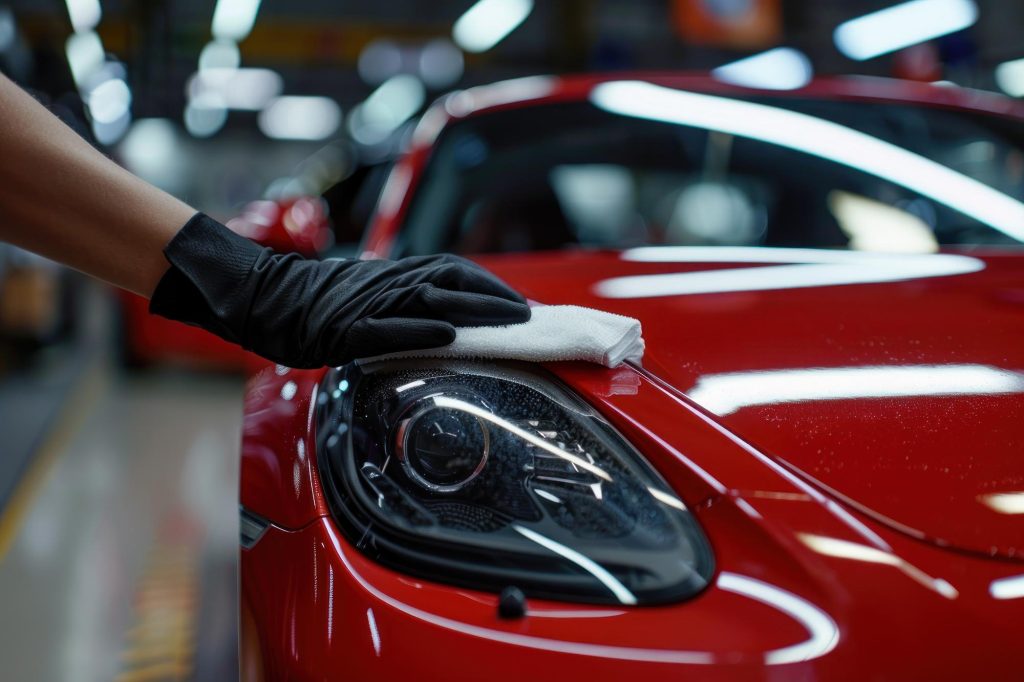
Paint correction is the process of refining the paint surface to reduce or remove visible defects and improve optical clarity. The level of correction depends on the condition of the vehicle, the thickness and character of the paint, the owner’s goals, and what is considered responsible for that specific surface. It is not about aggressive polishing for the sake of numbers. It is about improving the paint intelligently and safely.
When done correctly, paint correction can reduce swirl marks, light scratches, oxidation, towel marring, and other visual disturbances that prevent the finish from looking clean and premium. Once the surface is improved, ceramic coating can then be applied to help protect and maintain that better result.
Correction creates the foundation for the final look
Owners often focus on the coating because it sounds like the finishing step, but correction is what often creates the finish people admire. The clarity in reflections, the depth in darker paint, and the smooth, refined appearance under strong lighting usually come from preparation. The coating then helps support that look over time.
This is especially relevant for premium vehicles, Teslas, luxury SUVs, sports sedans, and executive daily drivers where finish quality is part of the ownership experience. Why settle for a protected surface that still looks tired if it can first be refined properly?
Not every vehicle needs the same correction level
A proper consultation should make this clear. Some vehicles need only a light polishing step before coating. Others need a more involved paint correction approach because of heavier wash damage, water spotting, or neglected maintenance. A new car protection scenario may still require correction if dealership preparation created marring. An older vehicle may need a more balanced strategy depending on its condition and the owner’s expectations.
At MCAR, vehicle assessment shapes the recommendation. The goal is not to push the biggest service. The goal is to match the process to the paint and the client. Need a protection plan that matches your driving habits and your vehicle? Contact an experienced team.
Why poor preparation compromises premium results
The biggest problem with rushed coating work is not that it always fails immediately. It is that it often looks good enough at first to pass casual inspection, while falling short of what a premium process should deliver. Under proper light, the hidden shortcuts appear. Swirls remain. Haze lingers. Trim edges may be messy. The paint does not show the crispness it should have shown.
That is why Paint Correction Before Ceramic Coating: Why Proper Preparation Changes the Result should matter to anyone who values finish quality. Preparation is where the final standard is defined.
Contamination and defects should not be trapped under protection
Before any correction or coating, the vehicle should be assessed and properly prepared. That means identifying contamination, evaluating paint condition, and deciding whether the surface is ready for coating or needs refinement first. Coating over unresolved defects is not a premium outcome. It is a shortcut disguised as convenience.
Looking for a cleaner, longer-lasting result instead of a rushed installation? Schedule a consultation.
Process discipline is part of the value
Premium service is not only about better chemistry. It is about better discipline. Controlled installation standards, careful inspection, proper paint correction, and responsible expectations all contribute to the result. That is why experience matters. More than 18 years of roots in Brazil and more than 7 years serving California clients have helped shape a process centered on finish quality, durability, and long-term vehicle value rather than fast turnover.
Peter L. described that consultative difference clearly: “Pedro gave his recommendations, took the time to explain carbon vs. ceramic, fit me in the very next morning, and the pricing and professionalism were excellent. He also explained what to expect during the drying process.” – Peter L.
That kind of communication matters because many owners do not need more marketing language. They need a clear explanation of what their vehicle actually needs.
Why new vehicles often need paint correction too
One of the most common misconceptions is that a brand-new vehicle does not need correction. In reality, many new vehicles arrive with defects that owners simply have not inspected closely yet. Transport residue, dealership washing, drying marks, or hurried delivery prep can already compromise the finish before the car reaches its owner.
For premium clients, that matters. New car protection works best when it starts with an honest look at the paint, not with assumptions.
New does not always mean flawless
It is very common for vehicles to arrive with light imperfections. These may be small enough to miss in casual lighting but obvious under inspection lights or direct sun. When ceramic coating is applied over that surface without paint correction, those issues do not disappear. They become part of the protected finish.
This is one reason premium owners increasingly choose consultative shops instead of fast package offers. They want to know what condition the vehicle is truly in before any product is recommended.
Better preparation supports better long-term value
If a vehicle is corrected and coated properly from the beginning, the owner starts from a stronger position. The finish looks better, maintenance becomes easier, and the vehicle presents more consistently over time. That cleaner presentation can support long-term vehicle value because the car looks more intentionally preserved. Comparing premium protection options and unsure where to start? Request professional advice.
Recent market observations show growing demand for premium vehicle protection, especially among owners seeking long-term finish preservation, resale value, and practical protection for daily driving.
How paint correction fits within a complete protection strategy
Paint correction is not isolated from the rest of the protection plan. It often works alongside ceramic coating, paint protection film, window tint, and other services depending on the vehicle and the owner’s goals. The right combination depends on how the car is used, where it is driven, and what level of preservation the owner wants.
A daily-driven Tesla may need paint correction before ceramic coating, plus full front protection and premium tint. A luxury SUV may benefit from correction, full body coverage in select cases, interior ceramic coating, and windshield protection film. A performance sedan may need refinement first so the finish can match the owner’s expectations before any long-term protection is installed.
Correction and coating do different jobs
This distinction is important. Paint correction improves the appearance of the surface. Ceramic coating helps preserve and maintain that improved condition. Paint protection film helps defend high-impact areas from physical road abuse. Window tint supports heat rejection and UV protection. Each service has a role.
When owners confuse these functions, they may end up disappointed. A coating is not paint correction. Paint correction is not self-healing film. A premium strategy respects those differences and builds the plan accordingly.
Tesla protection often benefits from early refinement
Tesla owners in particular tend to care about clean reflections, smooth body lines, and a crisp overall finish. Because the design language is so minimal, defects can stand out quickly. That is one reason paint correction before ceramic coating can be especially valuable on Teslas and similar premium vehicles. The cleaner the paint, the more the coating can support that sharp appearance over time.
Why consultation matters more than package language
Many owners hear phrases like “ceramic package” or “paint enhancement” without a clear explanation of what is actually included. That creates confusion and often leads to mismatched expectations. A consultative process should explain whether the vehicle needs decontamination only, a light correction, a more involved correction stage, or a combined protection plan with PPF and tint.
At MCAR, the method remains consistent: assess the vehicle, recommend the right products, prepare the surfaces properly, install with control, explain delivery, and provide aftercare guidance. That is how premium results become repeatable.
Premium clients want clarity, not pressure
Clients who value time, quality, and vehicle preservation do not want vague promises. They want to understand why paint correction is recommended, what it will improve, and how it affects the final coating result. They also want honesty about limitations. No responsible team should promise miracles or permanent perfection.
Kevin’s feedback reflects the value of that approach: “Pedro was extremely friendly and helpful. They did a fantastic job on the ceramic tint, everything looks great, and afterward they gave me clear instructions and explained the benefits of PPF without being pushy at all.” – Kevin
The best premium service feels educational, not aggressive.
Aftercare starts with a properly prepared surface
Aftercare guidance matters more when the initial work is done correctly. A refined, coated vehicle can be maintained more effectively when the owner understands safe washing, drying practices, and how to protect the finish from avoidable damage. But even the best aftercare cannot compensate for poor preparation at the beginning.
That is why Paint Correction Before Ceramic Coating: Why Proper Preparation Changes the Result is not just about aesthetics. It is also about setting the vehicle up for a better ownership experience after delivery.
What the owner actually sees when preparation is done right
When correction is performed properly before coating, the difference is often visible in the areas that matter most to premium owners. Reflections look cleaner. Dark colors show more depth. Metallic finishes appear more consistent. Under sunlight or bright shop lighting, the surface appears more intentional and less distracted by wash damage or haze.
That visual confidence changes how the vehicle feels day to day. The owner sees a finish that looks worthy of the protection applied to it. Want to protect your vehicle before the first rock chip happens? Talk to a premium installer.
The result is more than shine
Real finish quality is not just about a glossy surface. It is about clarity, consistency, and refinement. A vehicle can be shiny but still show heavy swirls. It can bead water but still look compromised. Proper preparation changes that. It gives the coating a cleaner foundation so the final appearance feels premium rather than merely treated.
It also shapes how the vehicle ages
A corrected and coated vehicle starts its protected life at a higher standard. That makes future maintenance more rewarding because the owner is preserving a better baseline. Over time, that can support stronger presentation, easier upkeep, and a more convincing ownership story when the vehicle is later evaluated for resale or trade.
Kyle R. highlighted that trust-building experience in a simple way: “I had my car tinted at M Car Window Tint in San Bruno about a month ago. The process was easy and fast. They quoted me and scheduled me the same day, explained the work clearly, and the tint still looks just as good. I’m super happy with the work and would highly recommend this place!” – Kyle R.
Attention | Service available via WhatsApp and phone. Scheduling conditions and team availability may vary based on evaluation and confirmation with the MCAR team.
Why preparation is where premium protection really begins
Owners often think protection begins when the film, tint, or coating is installed. In truth, premium protection begins when the vehicle is assessed honestly and prepared responsibly. That is especially true with ceramic coating. The coating may be the visible service people ask for, but paint correction is often the step that determines whether the final result feels average or truly premium.
Paint Correction Before Ceramic Coating: Why Proper Preparation Changes the Result reflects a bigger principle in automotive care: shortcuts usually reveal themselves later. Better preparation, by contrast, keeps showing its value over time. The finish looks cleaner, the protection makes more sense, and the vehicle carries itself with a level of quality that matches what premium owners expect. If your vehicle is about to receive ceramic coating, should the goal be a fast application or a finish that actually deserves to be preserved? Want expert guidance before choosing your protection plan? Speak with a specialist.
Paint Correction Before Ceramic Coating: Why Proper Preparation Changes the Result
This content is updated periodically according to best practices in responsible communication for premium automotive protection, paint protection film, window tint, ceramic coating, and consultative service positioning.
FAQ
Does every vehicle need paint correction before ceramic coating?
Not every vehicle needs the same level of correction, but every vehicle should be assessed first. Some need light refinement, while others need more involved paint correction before coating can deliver a premium-looking result.
Can ceramic coating hide swirl marks and light scratches?
No. Ceramic coating does not replace paint correction. It protects the surface and can support easier maintenance, but it generally follows the condition of the paint underneath rather than removing visible defects.
Is paint correction still important on a brand-new car?
Yes, in many cases. Brand-new vehicles can arrive with dealership wash marks, transport contamination, or light surface defects that should be addressed before coating is applied.
How does paint correction support long-term vehicle value?
A better-prepared finish usually looks cleaner, reflects better, and presents more consistently over time. That stronger presentation can support long-term vehicle value by helping the vehicle appear better preserved.
What do customers appreciate during a consultative protection process?
Many appreciate clear explanations and honest guidance. As one customer said, “Pedro was extremely friendly and helpful. They did a fantastic job on the ceramic tint, everything looks great, and afterward they gave me clear instructions and explained the benefits of PPF without being pushy at all.” – Kevin